Subscribe To Our Newsletter!

.svg)

SETTING THE RECORD STRAIGHT: MTHA Board Clarifies Misinformation
In recent weeks, a significant amount of misinformation has been circulated regarding the Maryland Thoroughbred Horsemen’s Association’s recent amendments and the bylaw amendments being proposed by member and trainer John J. Robb. That misinformation was prominently displayed during the recent May 2026 meeting of the Maryland Racing Commission.
The MTHA Board of Directors believes it is important to communicate clearly with its membership so that horsemen fully understand both what was originally proposed and what was ultimately adopted by the Board.
In February 2026, the MTHA received a request for a Special Board Meeting to consider several proposed bylaw amendments.
The proposals submitted by Mr. Robb at that time included:
- OWNER ELIGIBILITY - To be eligible to vote for, serve as, and remain a member of the Board of Directors as an Owner representative, an Owner must start a minimum of ten (10) races in the State of Maryland during each calendar year.
- TRAINER ELIGIBILITY - To be eligible to vote for, serve as, and remain a member of the Board of Directors as a Trainer representative, a Trainer must run the majority (more than 50%) of their annual race starts in the State of Maryland during each calendar year.
- Restricting voting rights so that:
- Owner-only members meeting the proposed Owner qualifications could vote only for owner representatives;
- Trainer-only members meeting the proposed Trainer qualifications could vote only for trainer representatives; and
- Qualified Trainer/Owners — a category in which most licensed trainers would fall — could vote for both Owner and Trainer representatives.
- Requiring the voting counting process to be conducted in-house by the Association although the process has been conducted by an independent third-party since 2014 to ensure transparency.
On March 1, at Mr. Robb’s request and with representatives of his choosing present, the Executive Committee met with Mr. Robb and his designees for an extensive four-hour discussion regarding the proposed amendments. Consistent with the understanding reached during that meeting, the Executive Committee agreed to formally present revised proposals for consideration at the next scheduled MTHA Board Meeting on March 19, 2026.
Following considerable discussion at the March 19, 2026 Board Meeting, which was open to all MTHA members, the Board voted to adopt a series of amendments intended to address the concerns that had been raised while still preserving broad participation and representation throughout the Association.
The amendments adopted by the Board included the following:
- Effective beginning with the 2026 election, owner-only candidates for the Board must hold ownership interests in horses that collectively made at least five (5) Maryland starts during the preceding 365 days.
- Effective beginning with the 2026 election, trainer-owner candidates must either:
- Have at least 50% of their starts occur in Maryland, or
- Accumulate at least thirty (30) Maryland starts during the preceding 365 days.
The Board unanimously believed these measures appropriately ensured that individuals seeking to serve on the Board maintain meaningful and current participation — or “skin in the game” — in Maryland racing, while avoiding unnecessary restrictions on the broader membership.
At the same meeting, the Board also rejected a proposal to conduct elections “in-house” and instead reaffirmed its longstanding practice of utilizing an independent third-party election services company to administer Board elections to protect the integrity, independence, and credibility of the election process. At the same time, in an effort to further improve transparency and confidence in future elections, the Board agreed that complete election results and vote totals would be published following future Board of Directors elections.
The Board further unanimously believed that some of the more restrictive proposals under consideration would have fundamentally altered the longstanding balance of representation between owner members and trainer members within the Association.
Notwithstanding these actions taken by the Board to address concerns raised by members, on April 9, 2026, the MTHA received a request for a Special Meeting of the Members submitted by Mr. Robb. This new proposal sought to implement substantially more restrictive bylaw amendments that would not only impose significantly heightened eligibility requirements for individuals seeking to serve on the Board of Directors, but would also dramatically limit, and in many instances eliminate, the voting eligibility of existing MTHA members seeking to participate in Association elections.
Mr. Robb’s proposed amendments were as follows:
SECTION 1. OWNER ELIGIBILITY
A member shall be eligible to vote for an Owner Representative or to serve as an Owner Director only if, during the preceding twelve (12) months, such member has owned not less than a twenty-five percent (25%) beneficial interest in one or more thoroughbred horses that have collectively made at least ten (10) official starts in the State of Maryland.
SECTION 2. TRAINER ELIGIBILITY
A member shall be eligible to vote for a Trainer Representative or to serve as a Trainer Director only if, during the preceding twelve (12) months, such member has recorded fifty (50) or more official starts in Maryland, or fifty percent (50%) or more of total starts have occurred in Maryland.
SECTION 3. VOTING STRUCTURE BY CATEGORY
All eligible Owners and Trainers may vote for Owner Representatives. Only eligible Trainers may vote for Trainer Representatives.
SECTION 4. ELECTION ADMINISTRATION AND TRANSPARENCY
All elections shall be administered by an independent third-party election company and results shall be made available to all members.
In simple terms, the newly proposed amendments would not only have severely restricted who could serve on the Board, but also would have totally eliminated the voting rights of a substantial percentage of the current membership.
The Board’s analysis of 2025 racing data determined that the proposed owner voting thresholds would have reduced voting eligibility to approximately 14% of currently licensed owners, effectively eliminating voting eligibility for nearly 86% of owners currently able to participate in the election process. Many smaller owners, partnerships, breeders, and long-time Maryland participants would have lost their ability to vote despite remaining actively invested in the future and success of Maryland racing.
Similarly, the proposed trainer thresholds would have reduced voting eligibility to approximately 24% of currently licensed trainers, eliminating voting eligibility for roughly 76% of trainers currently eligible to participate in Association elections.
Further compounding these restrictions, the proposed structure also would have prohibited the remaining eligible owners from voting for trainer Representatives, creating a system that significantly limited broad membership participation and concentrated voting authority among a much smaller segment of the organization.
At the same time, the Board did recognize that certain provisions of the bylaws relating to member voting rights and election procedures would benefit from additional clarification. Accordingly, to ensure consistency, transparency, and the protection of members’ rights, the Board, with the advice of legal counsel, adopted the following additional bylaw provision:
MEMBER AMENDMENT PROCEDURE
“Notwithstanding anything to the contrary contained in any other provision of these Bylaws, no alteration, repeal, or adoption of a Bylaw by the Members shall be valid unless it is approved by a majority vote of the entire Membership of the Association at a special meeting of Members called for such purpose”.
The Board believes the approach adopted in March appropriately balances the importance of meaningful and active participation in Maryland racing among individuals seeking to serve on the Board, while at the same time preserving broad, fair, and equitable voting rights and representation throughout the Association.
More importantly, while both the Board and the membership possess the authority to amend the Bylaws, the Board strongly believes that any proposed amendments affecting voting rights, voting eligibility, or representation on the Board should ultimately be decided by the full membership through a vote of the entire membership body.
Accordingly, in response to the request for a Special Meeting of the Members, the Board has agreed to call and conduct such a meeting, provided the process complies with the Association’s Bylaws and applicable Maryland law.
Questions have been raised regarding the requirement that the costs associated with the Special Meeting be paid by those requesting it. Under Maryland corporate law, including the provisions governing nonprofit corporations such as the MTHA, members requesting a special meeting are responsible for the reasonably estimated costs associated with preparing and mailing the official notice of meeting to the membership. Because a vote on proposed bylaw amendments by the membership requires polling the entire membership, the cost of conducting the process is comparable to a full Association election.
Consistent with all Association elections conducted since 2014, the MTHA will utilize an independent third-party election services company to distribute notices, collect proxies from members who choose to vote by proxy, and tabulate all votes in order to ensure transparency, integrity, and fairness throughout the process. Every eligible member will have the opportunity to vote on the proposed amendments either in person or by proxy.
The members requesting the Special Meeting have been advised of the estimated costs associated with conducting the meeting. Upon receipt of those funds, the Association will proceed with issuing notice, holding the meeting, and conducting the vote.
Unfortunately, rather than continuing to engage with the Board through the Association’s internal governance process, Mr. Robb has now filed litigation against the Association in furtherance of his objectives. The Association believes the lawsuit contains significant factual inaccuracies and asserts claims that are without merit, and the Association intends to vigorously defend both itself and the actions taken by the Board.
It is regrettable that at a time when Maryland racing must remain focused on working together to strengthen and preserve the industry — and maintain the confidence and continued support of the State of Maryland — the Association is instead being forced to devote substantial time, attention, and financial resources toward internal division and litigation.
The Board of Directors also has a fiduciary obligation to act in the best interests of the Association and its membership as a whole. Throughout this process, the Board has acted under the guidance of independent legal counsel working in conjunction with the Association’s General Counsel as an additional safeguard to ensure that all actions taken are appropriate, consistent with the Association’s Bylaws, compliant with Maryland nonprofit corporate law, and in the best interests of Maryland racing and the membership at large.
Members with questions or concerns regarding the proposed bylaw amendments are encouraged to attend a bi-monthly meeting of the MTHA Board of Directors. The last meeting was held on May 27 at Laurel Park. The next meeting will be posted online at mdhorsemen.com and published in the Horsemen's Happenings email Newsletter. To subscribe visit: http://mdhorsemen.com/subscribe.
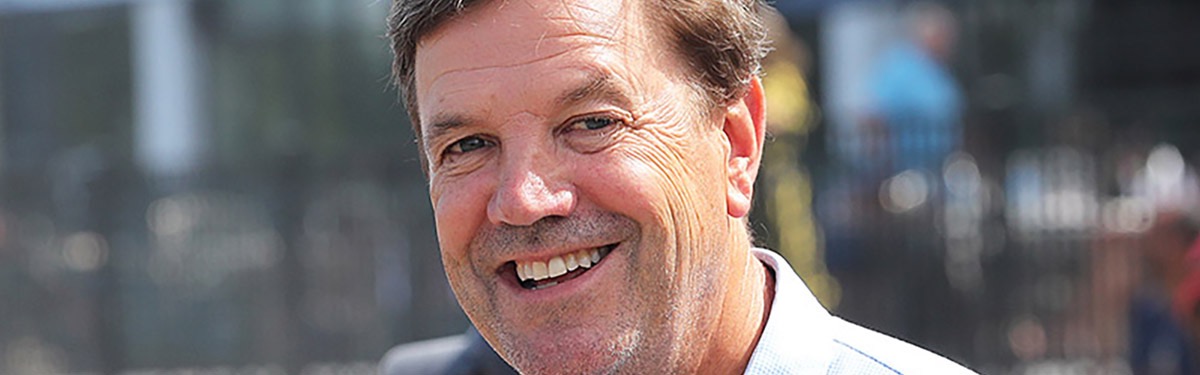
Kentucky Derby-winning trainer and MTHA Board member H. Graham Motion:
“Our Board works incredibly hard to encourage participation, listen to differing viewpoints, and make decisions that are in the best interests of Maryland racing and the entire horsemen’s community. Horsemen from all corners of the state are dependent on one another to make this work.”
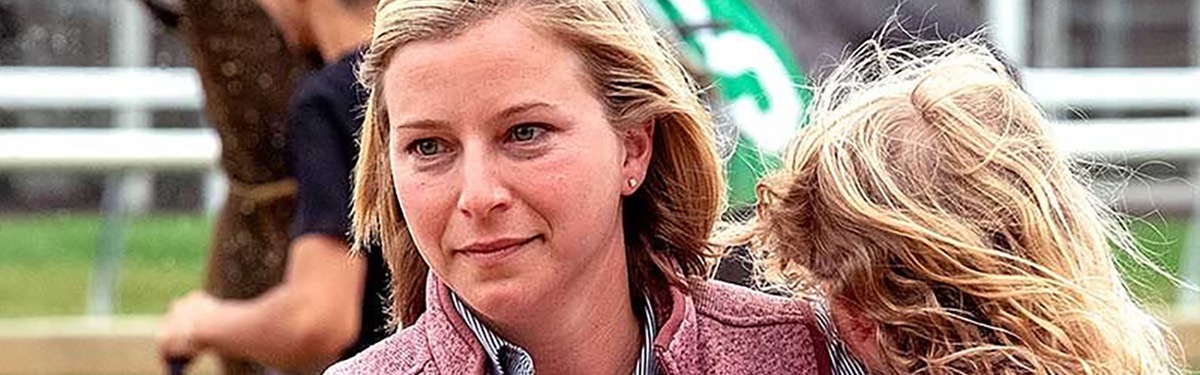
Maryland leading trainer and MTHA Board member Brittany Russell:
“I wish those who seek to divide Maryland’s racing community would focus instead on being constructive and productive members as we work through the serious challenges facing our industry. The Board listened to them and recognized some changes were warranted and others were ill-advised. The only way we move forward successfully is by working together, finding common ground, and supporting one another”

TMJC and MTHA Board member Timothy L. Keefe:
“If Jerry truly wants to influence the direction of the Association, he should run for the Board, engage with the entire membership, and build consensus. The Board is always willing to consider new ideas and constructive input, but meaningful progress comes through collaboration — not division when we can least afford it.”

MTHA Board member Michael J. Trombetta:
“Our Board is committed to an open process and encouraging creative thinking and new ideas. We’d love new folks to step up and constructively contribute to help us shape the industry’s future. We welcome help. Resorting to old, tired tactics intending to divide and conquer is not the way forward.”

MTHA Board member A. Ferris Allen:
“A lot of serious challenges are facing Maryland racing right now — horse shortages, uncertainty surrounding redevelopment, stagnant handle, and aging facilities among them. There’s no question these are difficult and pivotal times for our industry, and naturally people ask whether new leadership is needed to guide us forward. Personally, I believe we are far better served by the experienced and proven leadership the horsemen currently have in place through the MTHA.”
“The work the MTHA Board and organization have accomplished for Maryland horsemen goes far beyond anything I’ve seen in my lifetime in this business. Programs like MedStar Health, the backstretch pension plan, recreation and counseling services, immigration and visa assistance, the Mobile Dentist program, and our commitment to thoroughbred aftercare didn’t happen overnight. Those programs were built through years of hard work, dedication, and a genuine commitment to the people who make this industry run.”
Latest Posts

The Maryland Thoroughbred Horsemen’s Association Board of Directors on October 1 approved a slate of 26 candidates—12 owners and 14 trainers—that was presented by its Nominating Committee.
Dr. Forrest Wendaur, who operates a private equine veterinary practice in Woodbine, Md., has been hired as a part-time association veterinarian for The Maryland Jockey Club.
