
Subscribe To Our Newsletter!

.svg)

New Maryland Racing Commissioner Kirsten Green Brings Horsemen an Open Door on Aftercare
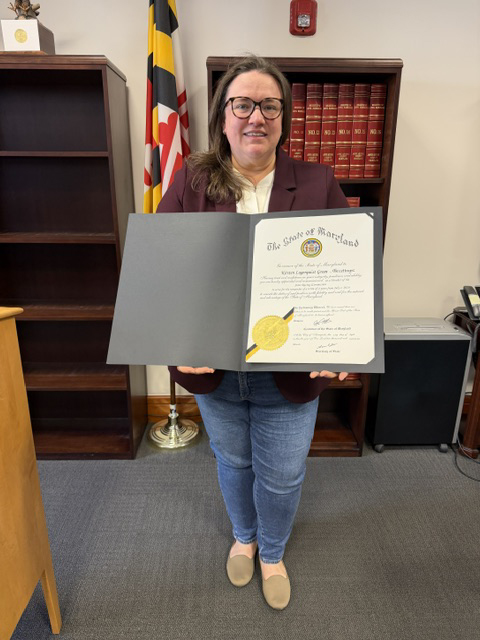
Retired Racehorse Project Executive Director hopes to serve as a resource as Maryland’s new horse slaughter law takes effect.
The timing of Kirsten Green’s appointment to the Maryland Racing Commission could hardly have been better.
Sworn in on May 1, Green, Executive Director of the Retired Racehorse Project (RRP), joined the commission just weeks before Maryland’s new horse slaughter law took effect on July 1. As the commission begins developing regulations to implement the legislation, Green believes one of her most important responsibilities is serving as a resource for horsemen navigating the new requirements.
“I have absolutely no interest in making anyone’s job or life more difficult than it already is,” Green said. “I sincerely want to be seen as a partner, not an adversary.”
A Familiar Face with an Aftercare Perspective
A Maryland native, Green grew up riding Thoroughbreds at Reddemeade Farm in Montgomery County and attended Maryland Million Day at Laurel Park as a child. Although her career ultimately took her into Thoroughbred aftercare rather than racing itself, she has spent more than a decade working alongside the racing industry.
Green joined the Retired Racehorse Project in 2014 as its first paid employee and eventually became Executive Director after helping grow the organization into one of the nation’s leading Thoroughbred aftercare organizations.
“My understanding of racing has always come through the lens of this job,” Green said. “Aftercare is part of the industry, and I’ve always seen my role as one that uplifts racing rather than critiques it.”
Practical Advice Under Maryland’s New Law
Green stresses that the new legislation is centered on documentation, transparency and responsible transfers of ownership—not creating unnecessary burdens for horsemen acting in good faith.
Her advice is straightforward:
- File retirement reports with The Jockey Club and HISA promptly.
- Properly document every transfer of ownership.
- Use a written Bill of Sale for every transaction.
- Maintain thorough records of where horses are placed after racing.
“The mechanisms of protection should always be happening regardless of legislation,” Green said.
The RRP provides a free, attorney-reviewed Bill of Sale template that includes provisions such as a right of first refusal, anti-slaughter language and restrictions on auction sales. Green believes these types of agreements provide important documentation while encouraging responsible placements.
“So much of this industry operates on handshakes,” she said. “While that reflects a culture built on trust, we need to improve on the administrative and documentation side. Our ability to enforce these things will rely on paper trails, and that’s where compliance begins.”
Horsemen Acting in Good Faith Shouldn’t Be Concerned
Green understands that some trainers have expressed concern about how broadly the new law may apply.
“This legislation is much more about traceability and how transactions are documented,” she explained. “If you are doing your due diligence and your paperwork is in order, I don’t think you have anything to worry about.”
She emphasized that the legislation is intended to address individuals who knowingly place horses into the slaughter pipeline—not trainers who are making thoughtful, documented efforts to retire horses responsibly.
“If you are asking questions, being thoughtful and documenting what you do, you should not be concerned about this legislation,” Green said.
Resources Available to Maryland Horsemen
Green encourages trainers looking to retire a horse to begin with established aftercare organizations.
For Maryland horsemen, Beyond The Wire remains the primary resource for transitioning Thoroughbreds to second careers. Supported by the MTHA, The Maryland Jockey Club and other industry partners, Beyond The Wire assists trainers with placement and retirement logistics.
The Retired Racehorse Project also offers a free national online listing service that helps connect retiring racehorses with prospective adopters, trainers and second-career owners throughout the country. The organization has found that the growing demand for retired Thoroughbreds has significantly increased the value of many horses entering second careers.
“A well-timed transition can actually put more money in a trainer’s pocket than waiting,” Green said. “The horse is more marketable, and the process is less stressful for everyone involved, especially the horse.”
An Open Door
Although she is still new to the Maryland Racing Commission, Green says she hopes her experience in aftercare and her willingness to listen can help build stronger relationships between regulators and horsemen.
“I’m still very new,” she said. “I want my newness to be a strength. I’m here to listen and learn because that benefits everyone.”
For Maryland horsemen with questions about the Retired Racehorse Project, responsible retirement practices or the transition process, Green says her door is always open.
“I have an open-door policy,” she said. “I’m happy to answer questions, share what I know, help educate where I can and receive perspective where I should. Whatever I can bring to the table, I’m happy to do so.”
Need Assistance?
Beyond The Wire can assist Maryland trainers with racehorse retirement and placement. Contact administrator Jessica Hammond at 301-776-0404 or visit beyondthewire.org for more information.
The Retired Racehorse Project offers a free Bill of Sale template and horse listing service for owners and trainers transitioning Thoroughbreds to second careers.
Latest Posts

An October 7 Daily Record article about proposed Maryland Racing Commission regulations has generated questions about increased penalties, medication enforcement and the state’s investment in Thoroughbred racing.
The Maryland Thoroughbred Horsemen’s Association Board of Directors on October 1 approved a slate of 26 candidates—12 owners and 14 trainers—that was presented by its Nominating Committee.
